
 Aivota
Intent into natural speech
AI based Augmentative and alternative communication (AAC) that turns non-verbal intent into natural speech, giving users a voice that adapts to their world - so they can be understood, not just be heard.
Book a Demo / Contact Sales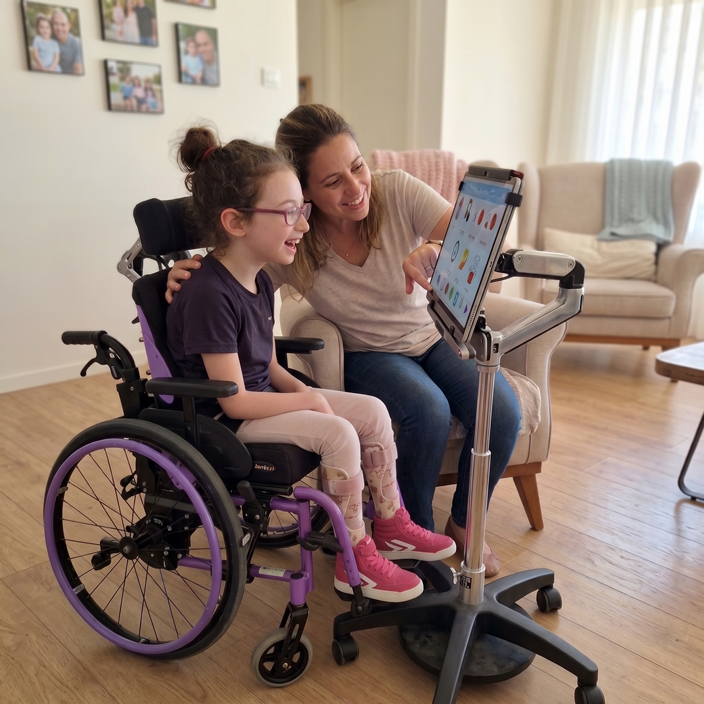

Empowering the User & Reclaiming Clinical Time
Give Every Voice Real-Time Expression.
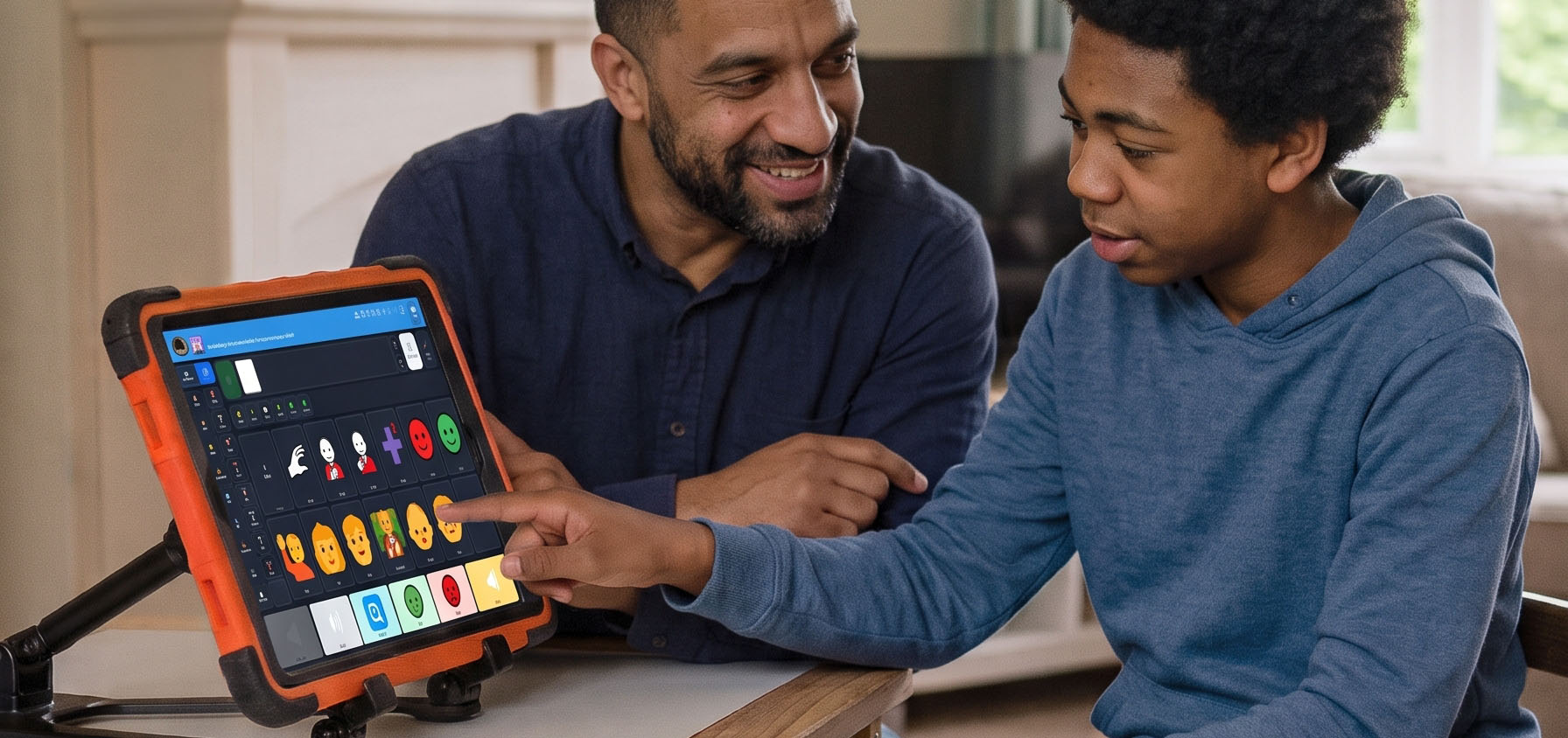
Aivota AAC Software
Next-generation, AI-based and context-aware communication system that enables real-time natural speech.
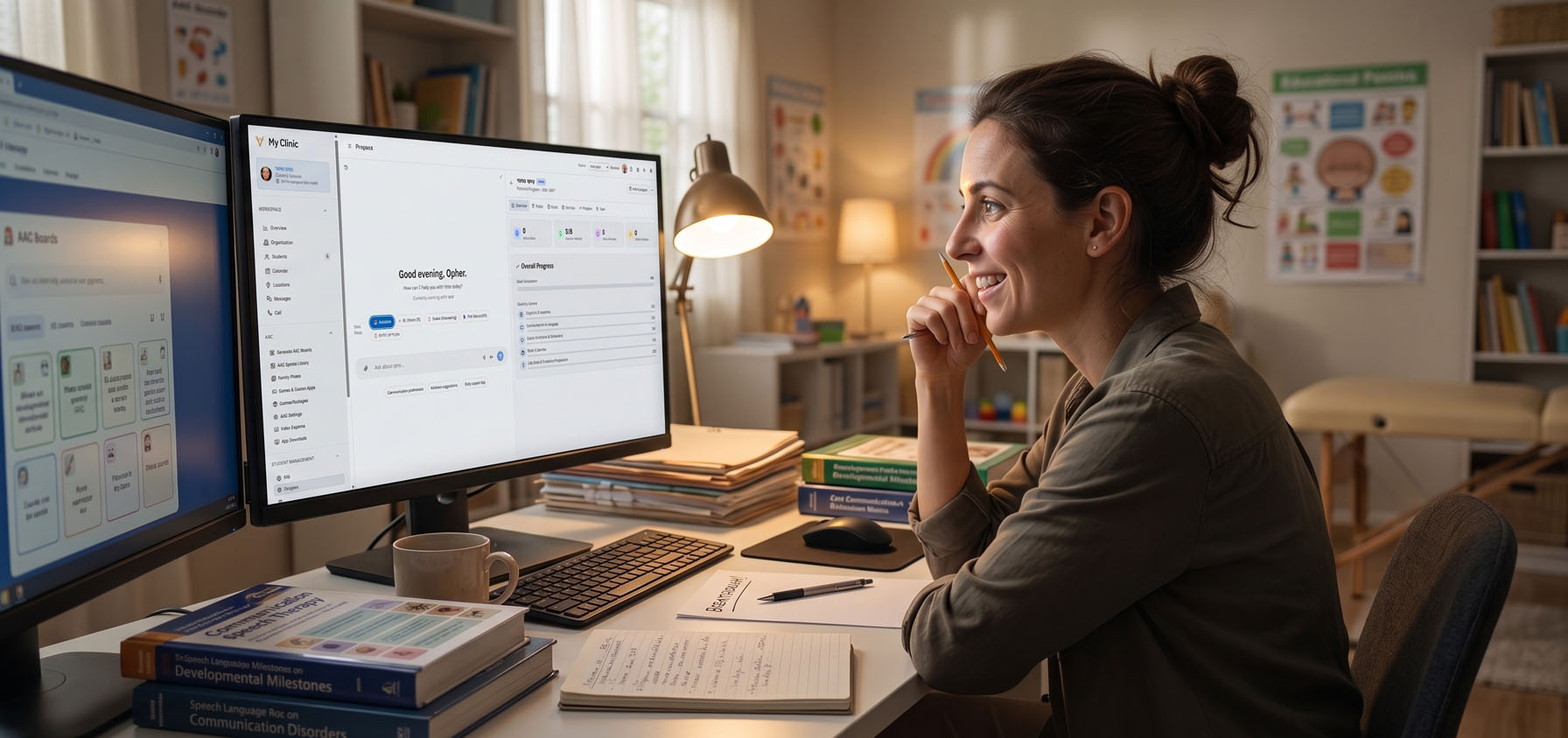
CliniAACian Platform
Automates data-driven IEPs, clinical transcription, board setup, and intent decoding. Reduces paperwork by up to 50% while acting as the clinical system of record.
One System. Every Vertical.
Aivota unifies the data thread across the entire care and research continuum.
Families
Empowers daily communication at home while eliminating the burden of manual progress logging for SLPs.
Schools
Adapts to classroom contexts while automating IEP reporting to ensure compliance and free up time.
Private Clinics
Drives progress faster while cutting clinical documentation time to expand caseload capacity by 25%.
Hospitals
Enables instant bedside communication while automatically logging longitudinal data to reduce nursing workload.
HMOs
Boosts member engagement along care pathways while aggregating automated outcome data to streamline quality reporting.
Research & Pharma
Captures real-world user intent while automatically structuring behavioral telemetry into regulatory-grade Real-World Evidence.
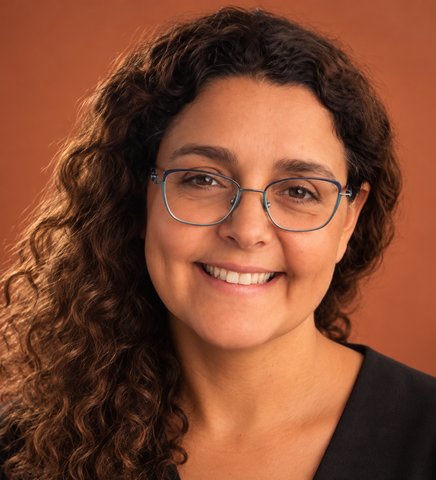
"What I love about Aivota is that it expands AAC beyond just a tool for expressing predetermined messages. It gives my clients a dynamic space that supports their agency and authentic connection. It has allowed me to increase my focus on creating rich environments and supporting communication as it emerges through real-life experiences."
Dr. Raz Tenebaum PhD
Board member, Former President of ISAAC-ISRAEL and leading Speech-Language Pathologist
Contact us and start your pilot today
Join us as a Design Partner. Let's discuss how we can return time to your clinicians.
Frequently Asked Questions - FAQ's
What is AAC?
AAC most commonly stands for Augmentative and Alternative Communication, which refers to methods, tools, and systems that supplement or replace spoken or written language for people with speech difficulties.
Types of AAC:
- Unaided communication: Methods that do not use external tools, such as facial expressions, gestures, body language, and sign language.
- Aided communication: Methods that use external physical or electronic tools, such as picture boards, communication books, touchscreens, and speech-generating tablets.
Who Uses AAC?
- Developmental conditions: People with autism, cerebral palsy, or intellectual disabilities.
- Acquired conditions: Individuals affected by a stroke, traumatic brain injury, ALS (amyotrophic lateral sclerosis), or Parkinson's disease.
- Temporary needs: Patients recovering from surgery or temporary vocal cord damage.
For millions of people globally who cannot use standard interfaces or speech, AAC provides a voice. While legacy AAC devices rely on rigid, static grids, modern AAC utilizes AI to decode non-verbal intent and environmental context into natural speech.
How is Aivota different from traditional AAC apps?
Traditional systems treat users like vending machines - press a button, get a word. Aivota is a vertical operating system powered by a Multimodal Intent Decoder that fuses symbols, atypical vocalizations, and contextual data to provide one clear interpretation of the user's intent.
Does Aivota replace the need for a Speech-Language Pathologist (SLP)?
No, Aivota empowers clinicians by reclaiming up to 15 hours per week typically lost to manual, regulatory documentation. Our CliniAACian tool functions as an AI scribe, automatically calculating objective language metrics like MLU and NDW, and drafting SMART goals.
How does Aivota help parents and caregivers at home?
Aivota provides a Caregiving Command Center for families that syncs directly with institutional records. The CliniAACian platform acts as an AI interpreter, decoding fragmented AAC outputs so caregivers can easily understand the user's intention.
Will I spend hours setting up communication boards?
No. Our platform includes an AI tool that automatically generates personalized communication boards tailored to the user's specific context and needs. This saves vital time for therapists, educators, and caregivers.
How does Aivota handle data privacy and HIPAA compliance?
Aivota uses a fully HIPAA-compliant cloud architecture. We isolate Protected Health Information (PHI) from the generative AI models, allowing safe operation within high-security educational and healthcare institutions.
How does Aivota utilize ‘Dark Data’ to improve care?
Massive amounts of behavioral and intent-based data are generated daily but never structured or recorded. By owning the System of Record, Aivota captures this “Dark Data” - fusing gaze, gestures, and environment into high-fidelity clinical data that was previously impossible to record manually.
Can Aivota predict what the user wants to say?
Yes. The Aivota AAC software is a context-aware system that predicts and suggests vocabulary in real time. By moving beyond static grids to dynamic, context-aware vocabulary, it enables much faster and more fluid conversations.
Do I need to purchase specific, expensive proprietary hardware?
No. Unlike legacy hardware-centric systems, Aivota is a vertical operating system that can run on standard devices while seamlessly integrating with existing accessibility peripherals. The platform natively supports alternative access methods like eye-gaze and touch screens, and supports tablets, iPads, and eye-gaze devices.